
City bike crash
A cycling collision in NYC

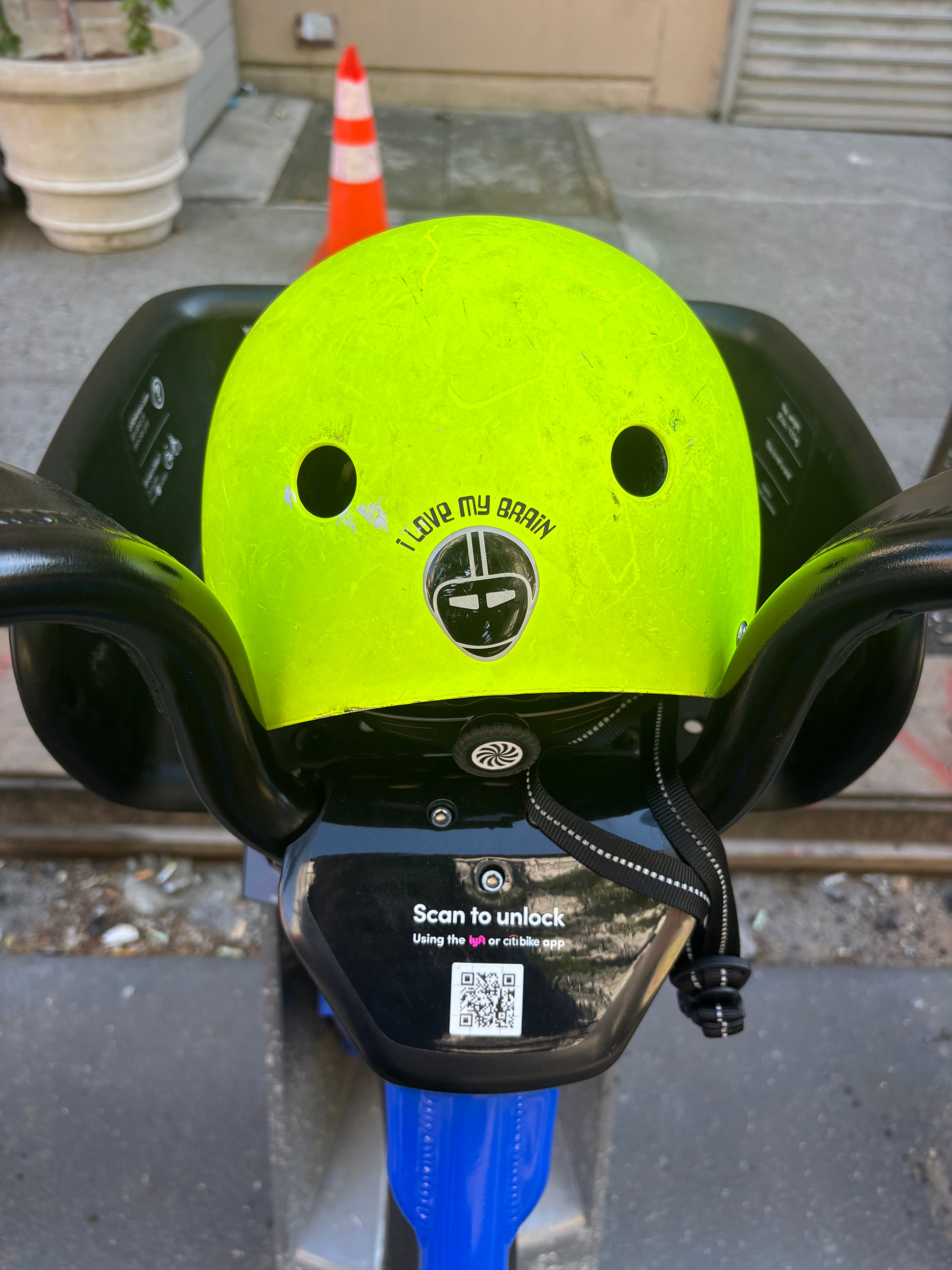
I was biking onto Third Avenue when a delivery guy sped into my path. I squeezed the brakes, but it was too late. We crashed. I hit the ground hard.
I scrambled to my feet, picked up the fallen bike, and glared at the young rider, still on his electric bike. Dude, I said. You hit me. He glared back, his face impassive and unreadable. Sorry, he said in accented English. We kept staring at each other while cars swerved to avoid us, rocks in a stream. Then he blinked and rode away.
Stunned, I wheeled the bike to the sidewalk to assess the damage. No blood. No broken bones. No concussion. Sore forearm. Scraped palms. Wounded pride.
Maybe I should have returned the bike to a nearby dock and taken the subway. But that felt like cowardice. What do I tell my students, my son? You fall, you get back up, and keep going.
Before the crash, I had been feeling a renewed sense of vitality. Over spring break, I had hiked and skied with a friend and savored a yoga retreat with Jess. Last weekend, I had run a 5K with my cousin, sprinting through sunny suburban streets exploding with cherry blossoms, and finishing second in my (new) age bracket, only slightly behind a speedy sixth grader.
Before the crash, I had also been feeling a renewed sense of social connection. After a lonely winter, I had been spending more time with friends and family in New York. And every day in April, I was writing postcards to friends and family, near and far. Sound familiar? In November, I wrote 30 letters to 30 people in 30 days.
Before the crash, I had been feeling lighter at work. In Spanish classes, students were understanding and speaking the language with less stress and more joy. In journalism class, students were reporting, writing, and publishing livelier articles. Along the way, we all had found a sweet spot between serious and silly, between work and play. Heading into the home stretch of the school year, my first full year at a new job in a new career lane, I felt like I had nothing to prove, grateful to be immersed in language and learning, communication and connection.
After the crash, my shoulders and back ached. I had probably tensed and torqued when I braced myself for impact. The pain persisted. Running was impossible; often, it hurt to walk. Last spring, I was training for a triathlon. Now, I was literally limping.
Meanwhile, a friend in Wisconsin–who had taught me the joys of city cycling nearly 20 years ago–had spinal surgery. A friend in New York had shoulder surgery. And my brother in Brooklyn re-injured his back and was going to physical therapy. Were we all falling apart at the seams?
If the physical pain of the bike crash was minor, the psychological pain cut deeper. Was the collision a random mishap, a statistical inevitability? According to a recent article in AM New York:
NYC is seeing a deadly trend: A surge in crashes, including fatal ones, involving motorcycles, scooters, e-bikes and other two-wheeled motorized devices this year…Reported e-bike collisions, for example, jumped 75% this year compared to the same time in 2025.
Or was the crash a warning, a sign that I still need to slow down–on the road, in life? Was it yet another lesson in relinquishing control? Another intimation of mortality?
The day after the bike crash, I rode the subway to and from work. But after two days of commuting underground, I felt claustrophobic and restless.
Back in the saddle that morning, I rode down Lexington Avenue, pedaling slower, weaving less, pausing longer at intersections, more mindful, less oblivious. Gradually I relaxed, increasing speed, regaining confidence, and reclaiming the road.
Fifteen minutes later, I docked the bike downtown. The electronic sensor chirped. The green light flashed.
Extremely relatable post. A crash on a Citi bike really humbles you for a few days/weeks.